
RMM 2026 Post-Event Insight: Beyond EACs - What Comes Next for Renewable Energy Markets?
The 14th RECS Market Meeting 2026 (RMM2026) was held in Prague, Czech Republic, under the theme “Now or Never! Renewables markets at a crossroads.” After many years of being closely associated with Amsterdam, this year’s move to Prague marked a new chapter for the annual gathering, bringing together long-time market participants as well as a wider mix of new faces from across the renewable energy sector.
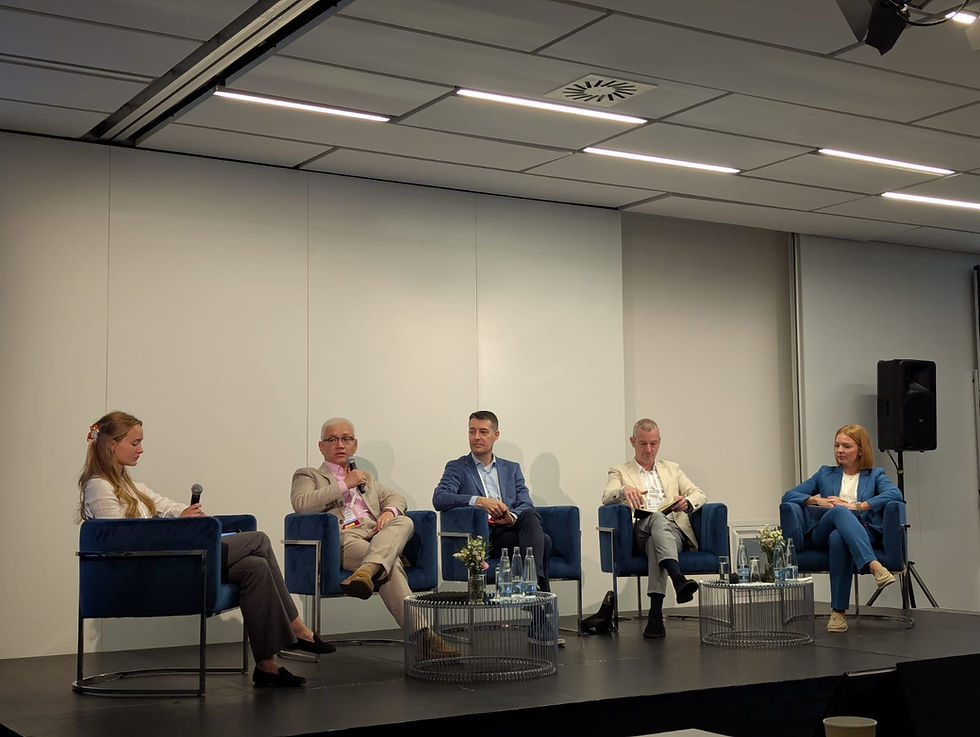
For Mt. Stonegate, RMM2026 continued our ongoing engagement with one of the key global forums for renewable energy market development. This year, Dr. Jules Chuang, Managing Director of Mt. Stonegate, joined the session “Subsidy Push or Demand Pull – Does Transition Need More Than Energy Attribute Certificates (EACs)?” The discussion reflected one of the broader questions shaping the conference: how renewable energy markets can move beyond participation and create stronger real-world impact.
Another notable feature of this year’s event was its new conference format, which was built around debates and dialogues rather than conventional presentation-style sessions. This approach created a more interactive environment, encouraging participants to challenge assumptions and exchange perspectives from different parts of the market.

Beyond EACs: Building a Broader Decarbonization Toolkit
Another recurring discussion was the marketability of combining EAC instruments with other mechanisms. EACs remain an important tool for corporate renewable electricity procurement, but the conversation is shifting toward how they can work together with policy frameworks, carbon-related instruments, cross-border market structures, and emerging energy solutions.
This connects directly with the question raised in Dr. Chuang’s session: whether the transition should be driven mainly by subsidy push, demand pull, or a more integrated combination of both. The emerging message is clear: EACs are essential, but they are no longer the only instrument companies need to consider.
Granularity Becomes a Central Market Question
One of the hottest topics throughout the conference was granularity. Discussions around EACs are increasingly moving beyond annual matching and basic renewable energy claims. Market participants are now paying closer attention to issues such as time, location, deliverability, and credibility.
This signals that the next phase of EAC markets may require more detailed and transparent procurement approaches. As corporate renewable energy claims face greater scrutiny, companies will need to better understand not only what they procure, but also how, where, and when that renewable energy is matched.
What This Means for Asian Markets
For Asian markets, several implications stood out.
First, the phase-in of the Carbon Border Adjustment Mechanism (CBAM) is starting to move from policy awareness to real corporate response. Export-oriented companies and supply chains are beginning to assess how carbon-related requirements may affect procurement, reporting, and market access.
Second, Cross-Border Electricity Trade (CBET) is gaining more attention, especially with Singapore-related projects shaping regional discussions. As renewable energy demand grows across Asia, cross-border electricity and regional market integration may become increasingly relevant.
Third, biomethane is entering the center of the decarbonization discussion. While renewable electricity remains a key focus, biomethane is becoming more visible as an option for sectors where direct electrification may be difficult, or where renewable gas certificates could support broader decarbonization pathways.
Looking Ahead
RMM2026 showed that renewable energy markets are entering a more complex and strategic phase. The next step for companies will not only be about purchasing EACs, but also about understanding how different instruments, regulations, and regional developments can work together.
For Asia, this means building renewable energy strategies that are credible, flexible, and future-ready. As market expectations continue to evolve, companies that act early will be better positioned to respond to both regulatory pressure and growing demand for high-quality renewable energy claims.
If you’d like to explore how evolving Energy Attribute Certificate (EAC) markets, greater granularity expectations, and emerging decarbonization instruments may affect your renewable energy strategy, Mt. Stonegate is here to support your journey toward credible and future-ready renewable electricity procurement. You can learn more about our insights and services by visiting www.mtstonegate.com.



Comments