
Why is Indonesia's Carbon Market Slowing Down than Expected?
Updated: Aug 31
As one of the world's largest holders of natural carbon assets, including tropical forests, peatlands, and mangrove ecosystems, Indonesia appeared well-positioned to become a major player in the global carbon market. Indonesia launched its carbon exchange in September 2023 and it was expected to support Indonesia's climate commitments and create new economic opportunities for emission reduction projects.
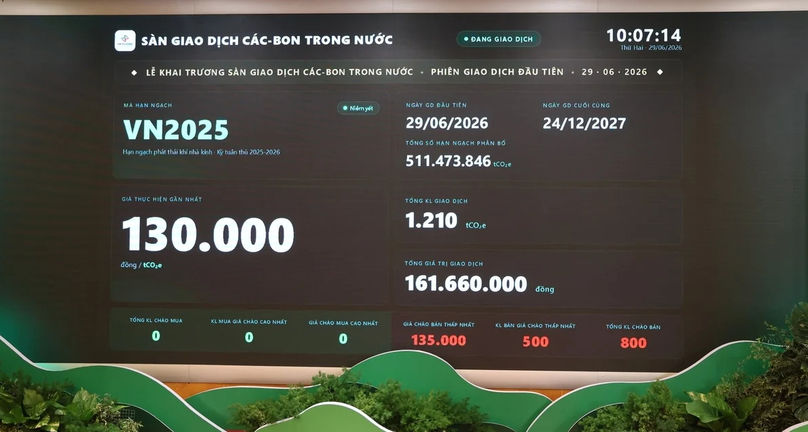
Figure 1. Inauguration of SRUK | Source: Kementerian Lingkungan Hidup
However, nearly three years after its launch, the market's development has been more gradual than many stakeholders initially expected. Since its highly anticipated launch on September 26, 2023, the Indonesia Carbon Exchange (IDXCarbon) has struggled to meet expectations, with trading volumes and participation levels remaining significantly lower than comparable international markets. While global carbon transactions generated over USD 100 billion in 2024, Indonesia’s total transactions reached a modest IDR 78 billion (approximately USD 4.9 million) by late 2025, with only 132 registered participants and eight projects listed. This stagnation is driven by a combination of design flaws, economic disincentives, and regulatory uncertainties.
Weak Demand and High Emission Caps
A primary reason for the market’s slow movement is the lack of domestic demand, largely due to how emission limits are structured. Currently, mandatory compliance is limited to the power generation subsector, specifically coal-fired power plants (CFPPs). However, the sectoral caps (PTBAE-PU) for these facilities were set so high that only a small fraction of them actually exceed their limits. When facilities operate within their generous allowances, they have no regulatory incentive to purchase carbon credits or pay taxes, effectively stifling the demand side of the market. Furthermore, the lack of strict financial sanctions, with the current regime relying primarily on administrative measures, reduces the urgency for companies to comply.
Economic Disincentives and Low Pricing
The financial logic for participating in carbon trading is currently unfavorable for many project developers. The market price for carbon credits in Indonesia has hovered around USD 2 to USD 4 per tonne, which is significantly lower than the global average and far below the levels required to make mitigation projects financially viable. For instance, the cost of reducing emissions through afforestation is estimated between USD 35 and USD 65 per tonne, and technology-based actions can cost up to USD 120 per tonne.
Furthermore, the proposed carbon tax rate of IDR 30,000 (roughly USD 2) is considered too low to drive decarbonization. For a carbon market to thrive, the tax rate should ideally exceed the price of carbon credits to incentivize purchases, yet Indonesia's proposed tax is often lower than the already depressed market prices.
Regulatory Overlap and International Ambiguity
The Indonesian carbon market has been hampered by unclear trading and certification procedures and overlapping mandates across various ministries. A major point of confusion for international investors has been the ambiguity surrounding Corresponding Adjustments (CA) and Non-Corresponding Adjustments (NCA) under Article 6 of the Paris Agreement.
International investors have been hesitant to participate because it was unclear whether credits generated in Indonesia could be exported or how they would be counted toward Nationally Determined Contributions (NDCs). This uncertainty, combined with a lack of transparency in the National Registry System (SRN-PPI)—which provides far less technical documentation than international standard registries—has diminished global confidence in Indonesian carbon credits.
Business Alternatives to Carbon Trading
Many Indonesian companies are choosing to focus on internal decarbonization efforts rather than market participation. Publicly listed companies are increasingly adopting Environmental, Social, and Governance (ESG) standards, leading them to prioritize energy efficiency, waste management, and transitioning to renewable energy within their own operations. Because carbon trading is often viewed merely as a supplementary measure rather than a primary tool for emission reduction, it has failed to gain traction as a core corporate strategy.
Looking Ahead: Can PR 110/2025 Accelerate Market Growth?
The introduction of PR 110/2025 represents a significant evolution in Indonesia's carbon market architecture. However, the key question remains whether regulatory reform alone can generate the market activity that policymakers and investors have long anticipated.
The evidence suggests that the primary challenge facing Indonesia's carbon market is no longer regulatory uncertainty but market demand. PR 110/2025 addresses many of the governance and transparency issues that constrained the market under PR 98/2021. It provides clearer rules, stronger institutional coordination, improved registry infrastructure, and greater certainty for international transactions.
Yet regulatory clarity alone may not create a vibrant market if economic incentives remain weak. Stronger demand may ultimately require tighter emission caps, broader compliance coverage beyond the power sector, more robust enforcement mechanisms, and carbon prices that better reflect the true cost of decarbonization.
In this sense, Indonesia's carbon market appears to be entering a new phase. The first phase focused on building institutions, regulations, and market infrastructure. The second phase will determine whether those foundations can generate sufficient demand and liquidity to unlock the country's immense carbon market potential.
Indonesia possesses many of the ingredients needed to become a major carbon market player: abundant natural climate assets, increasing corporate sustainability commitments, and a government that continues to strengthen the regulatory framework. While market growth under PR 98/2021 was slower than expected, PR 110/2025 may provide the foundation necessary for the market to transition from a period of institution-building to one of meaningful scale and growth.
References:
https://www.ahp.id/clientalert/AHPClientUpdate-5February2026.pdf
https://www.pwc.com/id/en/publications/esg/indonesia-carbon-market-white-paper.pdf
https://rmol.id/publika/read/2026/05/17/707433/tantangan-dalam-pengembangan-pasar-karbon-indonesia
https://ieefa.org/resources/two-years-after-launch-indonesias-carbon-market-struggles-find-momentum


Comments